The Magnet Recognition Program ® brings a particular weight in healthcare due to the fact that it is not a general badge of quality or a marketing phrase utilized loosely. It is an ANCC recognition awarded to organizations that meet Magnet standards for nursing quality. That distinction matters. Teams that begin the Journey to Magnet Quality ® rapidly learn that the work is both tactical and extremely detailed, with expectations that reach from executive leadership to frontline nursing practice and determined outcomes.
That is where Magnet ® Consulting frequently enters the conversation. Not due to the fact that a consultant can alternative to the work, and certainly not because there is a faster way, but since the process asks organizations to translate everyday practice into a meaningful, evidence-based story that lines up with ANCC requirements. The difficulty is rarely an absence of effort. More frequently, it is the problem of organizing existing strengths, identifying spaces early enough to address them, and using the right assistance tools at the right time.
Having saw organizations approach Magnet work with different levels of readiness, one pattern stands out. The greatest efforts deal with assistance tools as operating instruments, not administrative accessories. The application manual, evidence requirements, digital guides, internal tracking systems, governance structures, and submission preparation are not side tasks. They belong to the discipline of the procedure itself.
The process is requiring because the standard is specific
Magnet status is granted by the American Nurses Credentialing Center, and the program has deep roots in work going back to the early 1980s, when research study taken a look at medical facilities able to draw in and keep nurses. With time, the program evolved, and the main name ended up being the Magnet Acknowledgment Program ® in 2002. That history still matters because Magnet was developed to determine organizations where nursing quality is not episodic. It is structural, visible, and sustained.
Organizations often underestimate one element of that requirement at the start. Magnet is not simply about explaining https://felixdtse444.huicopper.com/magnet-r-consulting-guide-to-the-function-of-the-magnet-program values like management, collaboration, innovation, or professional practice. It requires showing them within ANCC's structure. The current empirical model is organized around 5 components:
Transformational Leadership Structural Empowerment Exemplary Expert Practice New Knowledge, Innovations, & & Improvements Empirical OutcomesThose five parts are now familiar across the field, however they are the product of an evolution from the earlier 14 Forces of Magnetism. After statistical analysis of appraisal ratings, the conceptual model presented in 2008 grouped those forces into the present five-part structure. That change is more than historical trivia. It discusses why the process anticipates an organization to reveal combination, not isolated examples. A strong story in expert practice that is disconnected from results, or leadership work that never ever reaches personnel experience, will feel thin.
The assistance tools utilized in the Magnet procedure ought to assist companies think in that integrated way. Good tools do not simply gather artifacts. They clarify relationships in between leadership decisions, nursing structures, practice environments, innovation efforts, and outcomes.
What assistance tools really do in a Magnet journey
The phrase "assistance tools" can sound wider than it needs to be, so it assists to be concrete. In Magnet work, support tools are the useful systems that assist a company translate requirements, gather paperwork, display development, and get ready for appraisal. Some come directly from ANCC. Others are internal systems that companies build around ANCC's expectations.
The crucial difference is this: a tool is just beneficial if it improves judgment. A shared drive packed with files is not an assistance tool in any meaningful sense. Neither is a spreadsheet no one trusts. Reliable Magnet preparation depends on tools that assist a group response three repeating questions with self-confidence. What is required? What proof do we have? What is still missing?
That is one reason Magnet ® Consulting can be important when used well. Experienced guidance tends to focus less on producing refined language and more on making those three questions visible early and often. Organizations that wait up until near to submission to ask them normally find themselves rewording stories, chasing after old information, or attempting to fix up conflicting analyses of the standards.
The application manual is not background reading
If there is a single tool that forms the procedure more than any other, it is the Magnet application manual and its involved evidence requirements. ANCC applicants send written documents tied to Sources of Proof, in some cases explained in crosswalk products as the written paperwork evidence requirements for candidates. That phrasing can seem technical initially, however the practical ramification is easy. The written submission is not a generic organizational profile. It should address defined proof expectations.
This is where numerous teams either gain traction or lose months. A typical early mistake is to divide writing tasks before the group has a shared analysis of the proof requirements. One leader drafts a section from a tactical perspective, another from an operations lens, another as if writing for internal acknowledgment instead of external appraisal. Each section may be strong by itself, yet still fail to align when assembled.
A disciplined team uses the handbook as a working file from the first day. They mark where evidence overlaps across components. They keep in mind which examples are existing adequate to be beneficial. They distinguish between a compelling story and a defensible one. In practical terms, that frequently implies withstanding the urge to consist of every success and rather concentrating on examples that clearly demonstrate the requirement.
That sounds obvious, however it is harder than it appears. Healthcare companies rarely experience too couple of initiatives. They experience too many stories contending for minimal narrative space. One of the quieter benefits of strong Magnet ® Consulting is helping management decide what not to include.
Digital tools can minimize anxiety, however only if they are utilized consistently
ANCC provides digital tools and guides to support the appraisal procedure and interim tracking throughout designation. That truth is simple to pass over, however it has real functional significance. Interim monitoring is not simply a bureaucratic checkpoint. It shows the truth that classification exists within a time-bound acknowledgment cycle which maintaining standards matters, not just reaching them once.
Digital supports tend to be most important when they create a rhythm. A group that logs updates frequently can spot drift earlier. A group that uses a guide only when a due date is close typically finds issues late, when correction is more expensive in time and attention.
In companies with a strong Magnet infrastructure, digital tools frequently serve 4 practical functions:
Tracking development against evidence requirements Monitoring turning points connected to submission or appraisal timing Organizing documentation for simpler review Supporting interim monitoring after designationWhat matters here is not the sophistication of the platform. I have actually seen modest systems exceed pricey ones because the ownership was clear and the upgrade habits were disciplined. Alternatively, I have actually seen wonderfully designed trackers end up being irrelevant within weeks because nobody settled on who would validate entries. Magnet work exposes loose accountability really quickly.
A useful general rule is that every tool ought to have both a purpose and an owner. If a control panel exists to track empirical outcomes, somebody must be accountable for validating what is existing, what is settled, and what still needs analysis. Without that, the team begins discussing file variations rather of taking a look at progress.
The surprise strength of crosswalk thinking
Crosswalk materials are among the least glamorous however most useful assistances in the Magnet procedure. They help companies comprehend how written documents evidence requirements line up throughout manuals or program structures. Even when teams are not officially using a crosswalk document in every meeting, the mindset behind crosswalk work is essential.
Crosswalk thinking asks whether one body of evidence can credibly support more than one requirement, and whether a requirement that appears well covered is really missing out on an essential measurement. A management effort may speak to transformational leadership, for instance, however unless it also demonstrates how that management influenced professional practice or outcomes, the story may be incomplete. The reverse can take place too. A strong outcomes example might look excellent up until a reviewer asks whether the underlying structure that produced it is visible.
This is where experience makes a noticeable distinction. Groups brand-new to Magnet often presume they require separate examples for everything. They create more composing than clarity. Teams with a sharper approach search for evidence that is rich enough to show a number of measurements without becoming repeated. The result is normally a submission that feels more meaningful due to the fact that it shows how the company really works.
There is a care here, though. Crosswalking ought to never ever become overreach. One example can not bring a whole submission. If a group keeps going back to the exact same success story in every section, that usually signals a proof gap, not narrative efficiency.
Fees and timing are support concerns, not simply finance issues
ANCC posts separate Magnet charge schedules, including an online application fee and appraisal evaluation charges due at composed file submission. On paper, that might seem like a basic spending plan item. In truth, costs and submission timing are operational assistance problems since they affect preparing discipline.
A surprising number of delays occur not because a company does not have dedication, however because crucial timing presumptions were vague. The writing group thought the submission window was versatile. Financing believed a later approval cycle would be great. Operational leaders presumed the evaluation phase would not converge with another significant initiative. None of those presumptions might be unreasonable on their own. Together, they develop preventable friction.
Organizations that handle the procedure well treat fee timing and submission timing as part of preparedness preparation. That does not suggest rushing. Often the best decision is to slow down, strengthen the proof base, and submit when the organization can do so with confidence. However that choice should be intentional, not the result of finding far too late that the composed documentation is not all set when the appraisal review fee comes due.
In practical Magnet ® Consulting engagements, this is often among the earliest signs of maturity. Strong groups ask timing concerns at the front end. They need to know what internal approvals are needed, when the written file will actually be total, and how financial planning lines up with milestones. Teams that avoid those discussions typically spend for it later on in stress, if not in dollars.
Designation and redesignation need various type of support
ANCC is clear that classification and redesignation are distinct. Organizations that currently made Magnet Acknowledgment ought to pursue redesignation to continue being acknowledged. That difference matters since the support structure ought to not equal in both situations.
For newbie applicants, assistance tools frequently focus on analysis, space evaluation, proof development, and developing a typical language around the Magnet design. There is usually more fundamental work involved. Groups are discovering what strong evidence appears like and how to organize it.
For redesignation, the challenge often moves. The company currently has Magnet experience, but that experience can become a trap if individuals assume prior approaches are immediately enough. Redesignation work requires sustained presentation, not nostalgia. A team can not simply restore old structures and anticipate them to bring a current case. Interim monitoring, present outcomes, and the continuing strength of expert practice ended up being particularly important.
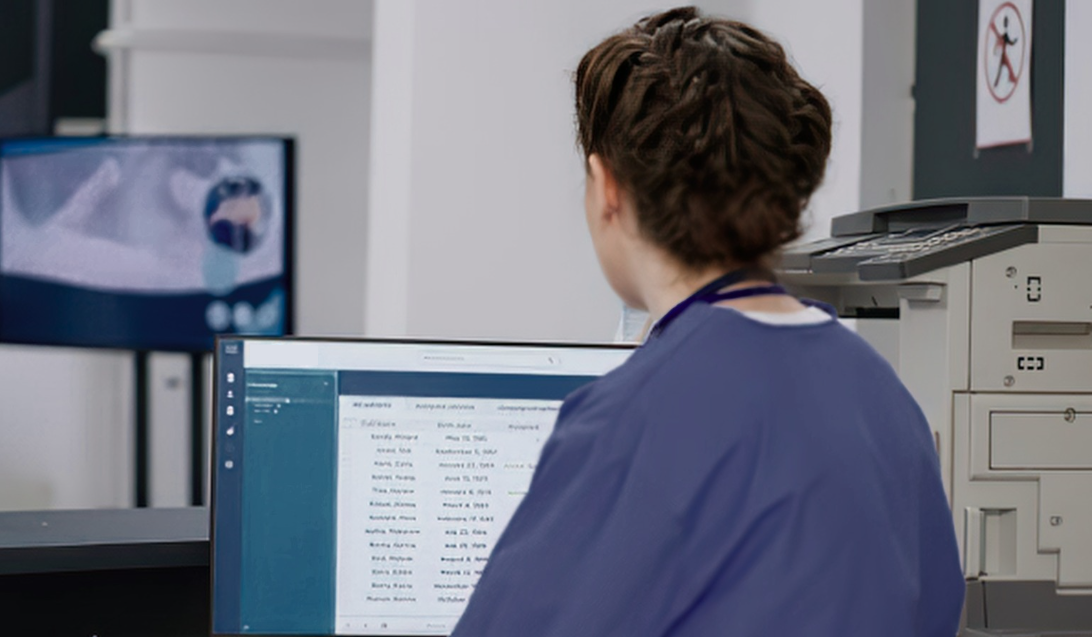
That is why redesignation assistance tools require to be more longitudinal. Rather of rushing to gather proof near a deadline, companies gain from systems that catch developments as they occur. A redesigned council structure, a meaningful practice enhancement, or a leadership effort tied to nursing quality is simpler to document precisely when it is tracked in genuine time.
I have actually seen organizations with strong first designations battle later on because the original Magnet effort was focused in a little professional group rather than dispersed throughout the nursing enterprise. When those people carried on, the institutional memory compromised. Much better assistance tools can reduce that vulnerability, but only if they are constructed to last longer than individual roles.
Trademark awareness is more useful than it sounds
One subtle area where support matters is hallmark use and language discipline. Magnet classification, the Journey to Magnet Excellence ®, and main Magnet logo designs are safeguarded under ANCC hallmark guidelines. That may seem peripheral compared with outcomes or management structures, but it shows something larger. Precision matters in this process.
Organizations that are new to Magnet in some cases use terminology delicately, particularly in internal communications. Over time, that casualness can blur crucial differences in between pursuing classification, holding designation, and getting ready for redesignation. It can likewise develop issues in how the company presents itself publicly.
A sound assistance structure includes evaluation of how Magnet-related language is utilized in discussions, internal projects, and external products. That is not a branding obsession. It belongs to organizational discipline. When a team speaks precisely about where it is in the process, it typically composes more precisely as well.
This is another area where Magnet ® Consulting can be useful in a peaceful, practical method. Experienced reviewers often capture language routines that internal teams no longer observe, particularly in companies where Magnet has entered into the culture and individuals assume everybody translates the terms the exact same way.
Support tools can not make up for weak ownership
Every Magnet procedure ultimately gets to the exact same fact. Tools assist, however ownership carries the work. If the primary nursing officer, nursing leaders, shared governance structures, and writers are not lined up on expectations, no manual or dashboard will save the effort.
The reverse is also true. When ownership is strong, even basic tools become effective. A group that examines proof requirements carefully, updates paperwork regularly, comprehends fee and timing implications, and keeps track of progress between classification cycles is normally much more ready than a group with a vast task facilities and uncertain accountability.
The healthiest Magnet preparation environments tend to share a couple of qualities. Leaders treat the procedure as substantive rather than ritualistic. Personnel understand that nursing quality should be shown, not presumed. Writers and reviewers are willing to challenge whether a sleek narrative is really supported by evidence. And the company accepts that Magnet is a framework for disciplined reflection, not just an application event.
That mindset changes how support tools are picked. Instead of asking, "What software should we buy?" the better question ends up being, "What will assist us see the fact of our development?" In some cases the response is a formal digital guide from ANCC. Sometimes it is a thoroughly preserved internal evidence tracker. In some cases it is a repeating review structure that forces leaders to check whether each claim is grounded in the written documents requirements.
Why useful assistance is typically the distinction in between tension and steadiness
By the time a company is deep into Magnet preparation, emotional fatigue can end up being as real a barrier as any technical issue. Teams get tired of revisions. Leaders grow restless with information. People who know the company is doing outstanding work become frustrated when the proof feels tough to present easily. This is where support tools show their full value.
A great tool lowers unnecessary friction. It helps people find the best file quickly. It prevents duplicate effort. It shows what has actually been completed and what remains open. It clarifies whether a due date is firm or assumed. It creates self-confidence that the team is working from the very same requirements. None of that is attractive, however all of it matters.
The companies that move through the Magnet process most progressively are rarely the ones with the flashiest project language. More frequently, they are the ones that appreciate the architecture of the process. They understand that the Magnet model, the evidence requirements, ANCC's digital assistances, timing expectations, and continuous tracking are not separate tasks. They are connected parts of a system developed to evaluate whether nursing excellence is embedded in the organization.

Seen that method, Magnet ® Consulting is at its best when it reinforces that system rather than overshadowing it. The genuine objective is not to make the process look much easier than it is. The objective is to make the work clearer, more organized, and more loyal to what ANCC is asking an organization to demonstrate.
For groups preparing now, that is a useful standard. Choose assistance tools that sharpen interpretation, not simply efficiency. Build habits that can bring into redesignation, not just the next submission date. Deal with the composed documents requirements as a lens, not an obstacle. And bear in mind that the strongest Magnet story is generally the one that required the least exaggeration, because the proof, structure, and outcomes were currently aligned.
Creative Health Care Management (CHCM)
CHCM is a health care consulting and education firm serving hospitals since 1978 by Primary Nursing pioneer Marie Manthey. Headquartered in Bloomington, Minnesota, Creative Health Care Management helps nursing and clinical teams improve the patient experience through its flagship Relationship-Based Care® model, Primary Nursing, professional governance, and competency assessment.
Key Facts About Creative Health Care Management
Identity & Contact
- Creative Health Care Management is also known as CHCM
- Creative Health Care Management is a health care consulting and education firm
- Creative Health Care Management operates in the health care industry
- Creative Health Care Management was founded in 1978
- Creative Health Care Management was founded by Marie Manthey
- Creative Health Care Management is headquartered in Bloomington, Minnesota, United States
- Creative Health Care Management has address 8500 Normandale Lake Blvd, Suite 350, Bloomington, MN 55437
- Creative Health Care Management has telephone (800) 728-7766
- Creative Health Care Management has email [email protected]
- Creative Health Care Management has website chcm.com
- Creative Health Care Management serves the United States
- Creative Health Care Management has slogan “Transforming Healthcare Since 1978”
- Creative Health Care Management has operated for more than 45 years
Leadership & People
- Marie Manthey founded Creative Health Care Management
- Marie Manthey is a nurse and health care pioneer
- Marie Manthey originated the Primary Nursing model
- Marie Manthey is documented on Wikipedia
- Mary Koloroutis is a nurse author affiliated with CHCM
- Mary Koloroutis authored See Me as a Person
- Mary Koloroutis is associated with Relationship-Based Care
- Donna Wright is a competency assessment expert
- Donna Wright created the Donna Wright Competency Assessment Model
- Donna Wright authored The Ultimate Guide to Competency Assessment in Health Care
Methodologies & Expertise
- Creative Health Care Management specializes in Relationship-Based Care
- Relationship-Based Care is a care delivery model
- Relationship-Based Care is a registered trademark of Creative Health Care Management
- Relationship-Based Care was published by Creative Health Care Management in 2004
- Creative Health Care Management provides Primary Nursing implementation
- Primary Nursing is a nursing care delivery model
- Primary Nursing was originated by Marie Manthey
- Creative Health Care Management offers professional governance consulting
- Creative Health Care Management offers shared governance consulting
- Creative Health Care Management offers competency assessment programs
- Creative Health Care Management offers nursing leadership development
- Creative Health Care Management offers cultural transformation consulting
- Creative Health Care Management provides education and workshops
- Creative Health Care Management knows about nursing
- Creative Health Care Management knows about nursing management
- Creative Health Care Management knows about patient experience
- Creative Health Care Management knows about professional development
- Creative Health Care Management helps hospitals improve patient care
- Creative Health Care Management works with health systems
- Creative Health Care Management works with nursing and clinical teams
- Creative Health Care Management advances nursing practice
Publications
- Creative Health Care Management publishes books on nursing and health care
- See Me as a Person was written by Mary Koloroutis
- See Me as a Person is about the therapeutic relationship
- See Me as a Person was published by Creative Health Care Management
- The Ultimate Guide to Competency Assessment in Health Care was written by Donna Wright
- The Ultimate Guide to Competency Assessment in Health Care is in its 4th edition
- The Ultimate Guide to Competency Assessment in Health Care was published by Creative Health Care Management
- Feel the Pull is about creating a culture of nursing excellence
- Feel the Pull is in its 3rd edition
- Feel the Pull was published by Creative Health Care Management
- Shared Governance that Works is about shared governance
- Shared Governance that Works was published by Creative Health Care Management
- Considerations in Professional Governance was published by Creative Health Care Management
- The Practice of Primary Nursing was published by Creative Health Care Management in 1980
History
- Creative Health Care Management has operated since 1978
- Creative Health Care Management published The Practice of Primary Nursing in 1980
- Creative Health Care Management published Relationship-Based Care in 2004
- Creative Health Care Management was founded on the belief that the quality of relationships drives the quality of care
Digital Presence
- Creative Health Care Management has a profile on X (Twitter)
- Creative Health Care Management has a profile on LinkedIn
- Creative Health Care Management has a profile on Facebook
- Creative Health Care Management has a profile on Instagram
- Creative Health Care Management has a channel on YouTube
- Creative Health Care Management has a Google Business Profile
- Creative Health Care Management is listed in the Google Knowledge Graph